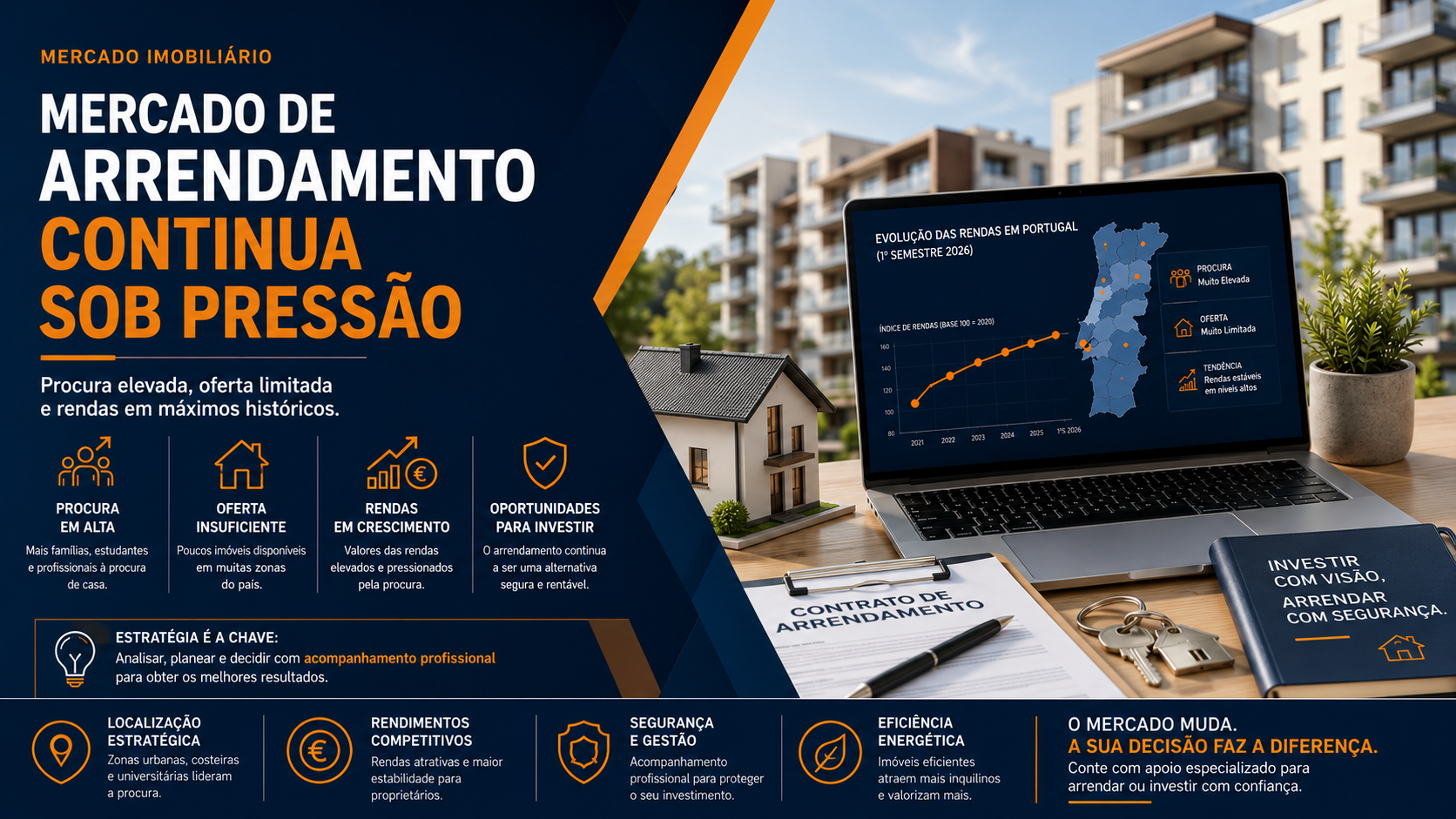
The rental market in Portugal continues to face one of the most challenging periods in recent decades. High demand, combined with a limited supply of available properties, is keeping strong pressure on rental prices, making it difficult for many families to access housing.
In recent years, several factors have contributed to this situation, making renting one of the central issues in the Portuguese real estate market. However, despite the challenges, opportunities continue to exist for both property owners and investors who know how to interpret market trends.
Demand Far Exceeds Supply
The main reason for the pressure on the rental market continues to be the imbalance between supply and demand.
In many regions of the country, especially in metropolitan areas, university towns, and coastal zones, demand for housing far exceeds the number of available properties.
This situation stems from several factors:
- Growth in the number of families looking for a home;
- Difficulty in accessing mortgage loans for some buyers;
- Professional mobility;
- Increased demand from domestic and international students;
- Growing demand from foreign workers who choose to live in Portugal.
As long as supply remains limited, pressure on the market is expected to continue.
Rent Trends
In recent years, rents have risen significantly across virtually the entire country.
Although the rate of growth has begun to stabilize in some areas, rents remain high when compared to the average income of Portuguese households.
The most sought-after locations continue to see the highest appreciation, namely:
- Lisbon;
- Porto;
- the Algarve;
- the Silver Coast;
- cities with a strong university presence.
Well-located, modern, and energy-efficient properties are in the highest demand and spend the least amount of time on the market.
Why Are There So Few Properties Available?
The shortage of supply results from a combination of several factors.
Among them are:
- A decline in new construction over several years;
- Growing demand for permanent housing;
- Owners choosing to sell rather than rent;
- Maintenance costs and taxes;
- Greater caution on the part of owners when selecting tenants.
The gradual recovery in construction may help balance the market, but its effects are unlikely to be immediate.
Opportunities for Landlords
Despite the challenges, this environment represents an excellent opportunity for those who own rental properties.
Among the main advantages are:
- High demand practically year-round;
- Shorter gaps between leases;
- The ability to carefully screen tenants;
- More competitive rental yields;
- Potential for property appreciation.
Naturally, professional property management remains essential to ensure security and profitability.
The Role of the Investor
Real estate investment for rental purposes continues to attract interest.
Even with acquisition costs higher than those recorded a few years ago, many investors continue to favor real estate for its stability and ability to generate regular income.
Before investing, it is important to analyze:
- Location;
- Expected return;
- Maintenance costs;
- Taxation;
- Potential for future appreciation.
A careful analysis helps reduce risks and maximize the return on investment.
The Importance of Energy Efficiency
Today, tenants increasingly value energy-efficient properties.
Homes with higher energy ratings offer clear advantages:
- Lower energy consumption;
- Greater thermal comfort;
- Reduced monthly costs;
- Greater market appeal.
For landlords, investing in energy efficiency improvements can lead to faster occupancy and increased property value.
What to Expect in the Coming Months?
All signs point to the rental market remaining dynamic for the rest of the year.
Although new measures to incentivize the construction and availability of rental housing may emerge, a balance between supply and demand is unlikely to be achieved in the short term.
Experts anticipate:
- Continued high demand;
- Gradual stabilization of rent growth;
- Increased demand in medium-sized cities;
- Growing appreciation of energy-efficient properties;
- Continued interest from investors.
In a constantly evolving market, having the support of a real estate consultant allows you to make more informed decisions, whether you’re looking to rent, invest, or generate income from a property.
Conclusion
The Portuguese rental market remains under strong pressure, reflecting an imbalance between high demand and still-insufficient supply. Despite this challenging scenario, there are significant opportunities for property owners and investors who act strategically and have a good understanding of the local market.
If you’re thinking about putting a property on the rental market or want to assess the investment potential in your area, professional guidance can make all the difference.
Need help with this topic?
Leila Santos
Real Estate Consultant — MaisConsultores TEAM
📍 Silver Coast
📱 +351 914 930 347
✉️ leilasantos@maisconsultores.pt
🏢 AMI: 23990
👉 Contact me for a no-obligation consultation.